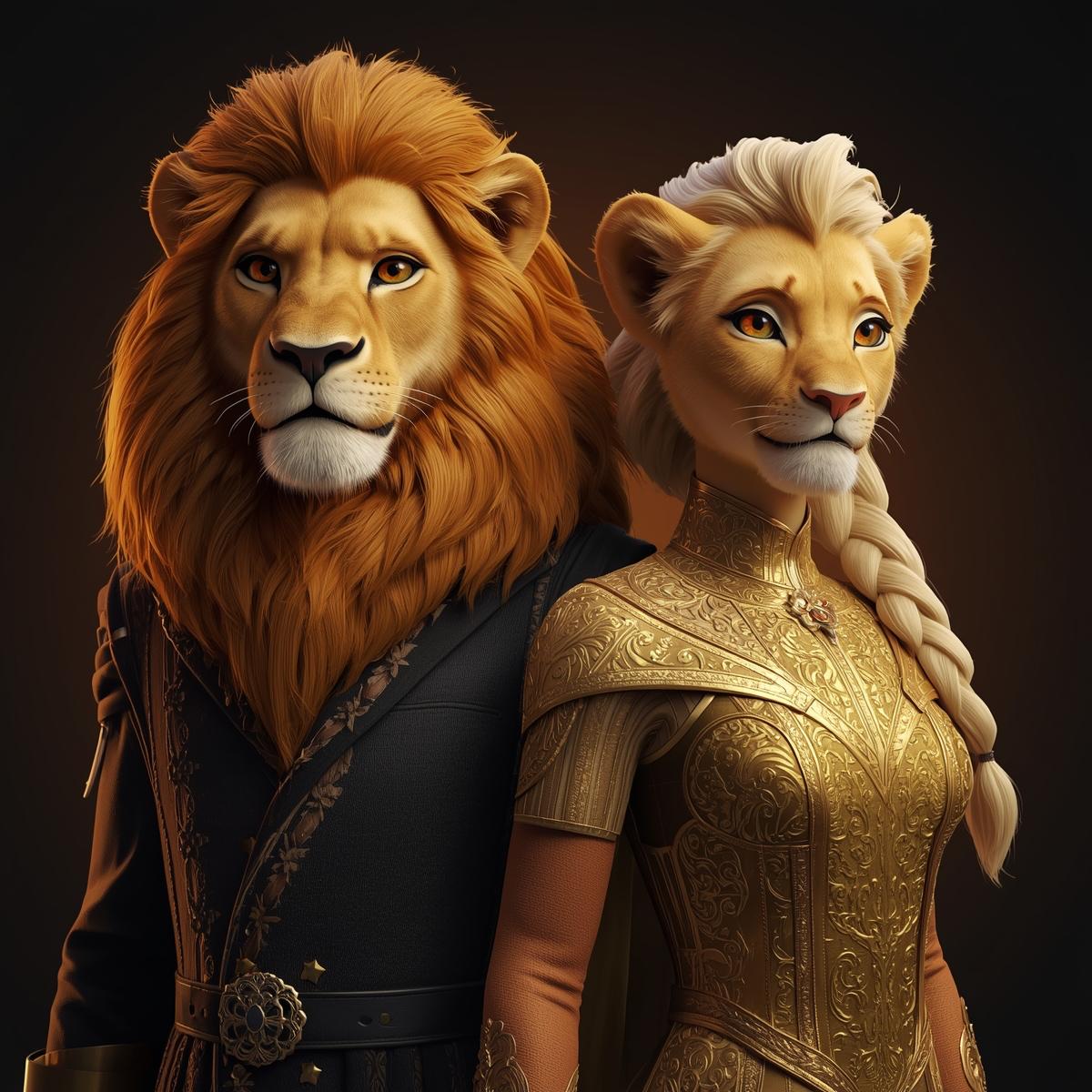
Ní neart go cur le chéile

Ní neart go cur le chéile
There's a version of this story that starts with policy — sanctions deadlines, budget negotiations, defence roadmaps. That story matters, and we'll get to it. But it's not where Ireland started.
Ireland started at Dublin Castle.
On 10 June, Taoiseach Micheál Martin launched the policy programme for Ireland's EU Council Presidency flanked by Tánaiste Simon Harris and Ministers Helen McEntee, Thomas Byrne, and Seán Canney. Not a solo podium moment. A full line-up. Before a single Council meeting had been chaired, before a single negotiation had opened, Ireland had already said something: this is not one person's presidency.
Compare that to Emmanuel Macron's entrance at the Louvre in 2017 — alone, floodlit, walking the length of a courtyard while Beethoven's Ode to Joy swelled behind him. That staging said solitude, civilisation, singular destiny. Dublin Castle said something almost opposite: institution, continuity, collective responsibility. Two very different countries, two very different moments, but the same underlying instinct — the venue speaks before the minister does.
A slogan in Irish, on purpose
Ireland's presidency motto is Ní neart go cur le chéile — "Strength with unity." It would have been easy to run this presidency, like most, in English-only messaging. Choosing to lead with the Irish phrase is a small decision with a bigger implication: at a moment when several EU states are drifting toward strongman politics and unilateral posturing, Ireland is explicitly branding itself as the alternative. Not the loudest chair. The steadiest one.
This is Ireland's eighth time holding the presidency — a fact the government has been quietly proud to repeat. It's a credibility play as much as a historical footnote: we have done this before, under different pressures, and Europe was still standing afterward.
Three words, in a specific order
The presidency's stated priorities are Competitiveness, Values, and Security. The order is worth sitting with. Competitiveness first is expected — Ireland is an open, trade-dependent economy, and the Draghi report's warnings about Europe's innovation gap loom large. Security last is arguably the most politically loaded of the three, given Ireland's neutrality sits in genuine tension with a Defence Readiness Roadmap and a Military Mobility Package designed to move troops and equipment across the continent.
But Values, sitting in the middle — not first, not last, not skipped — is the real signal.
Values, under real pressure
The presidency's decision to place Values alongside Competitiveness and Security isn't abstract positioning — it's a response to a specific, measurable trend. The V-Dem Institute's 2026 Democracy Report found that nearly a quarter of the world's nations are currently undergoing democratic backsliding, with three out of four people worldwide now living under some form of autocratic rule — the highest share since 1978. Six of the ten newly autocratizing countries identified this year are in Europe and North America, a fact the report's authors describe as "especially worrying" given the economic and political weight those countries carry.
This isn't a distant phenomenon happening in unstable states far from Brussels. It is arriving through the EU's own institutions. In Slovakia, the government has dismantled whistleblower protections and restructured public broadcasting under a director tied to the ruling party. In Hungary, the trajectory continues after sixteen years under the same leadership. In Poland, a newly elected government is still fighting to dislodge officials — appointed under the previous administration — who continue to block judicial reform from within.
Analysts increasingly describe this pattern as spreading "like malware" — not through shared ideology, but through shared technique: media capture, judicial pressure, patronage networks, selective enforcement of the law. Once one government demonstrates that these tactics work and carry no real cost, others adopt them.
This is the backdrop against which Ireland — a small, historically neutral member state — has chosen to put Values in the middle of its presidency's three priorities, not as a soft addition but as a live commitment. It is a deliberate bet that a country without Europe's largest economy or military can still use its six months at the chair to insist that democratic guardrails are not negotiable, even as larger states argue about how far they can be bent.
Beyond Dublin
The presidency isn't staying in the capital. Events are deliberately spread across Cork, Farmleigh House, Government Buildings, and towns nationwide — roughly 250 conferences and stakeholder engagements over six months, alongside 22 informal ministerial meetings and two Leaders' Summits. A national consultation last year drew 484 submissions from the public before a single line of the policy programme was written.
This is the substance version of the slogan. "Strength with unity" isn't just what Ireland says to the other 26 member states — it's the logic behind decentralising the presidency itself, making sure it doesn't read as a Dublin-only, government-only exercise.
The staging meets the stakes
None of this symbolism means much if Ireland can't actually broker outcomes — and the six months ahead are unforgiving. A new package of Russia sanctions is due by 15 July, with a hard deadline this time. The EU's 2028–2034 budget (the Multiannual Financial Framework) needs agreement among all 27 member states before the end of the year, with a French presidential election on the horizon in 2027 that could upend the whole negotiation if a far-right candidate wins. Ireland will need to publish its "nego-box" — the compromise budget numbers — by October, then survive a December European Council showdown.
This is where "honest broker" — the title Ireland has worn seven times before — gets tested against something harder than good branding.
The chair, not the loudest voice in the room
Roberta Metsola, President of the European Parliament — "The Keystone," in Powerlines' own shorthand — visited Dublin just before the handover to meet President Catherine Connolly and Taoiseach Martin. It's a small detail, but it fits the pattern: Ireland's presidency isn't trying to be the story. It's trying to be the structure that holds everyone else's story together for six months.
Whether that's naive or exactly right for this particular moment in Europe is a genuinely open question. But it's a coherent one — and coherence, in political communication, is rarer than it should be.
/
Claude is responding
I am parking it for today. Add it to my clickup for follow up. Lets move to the cms.
Acknowledged production status, created follow-up verification task
Acknowledged production status, created follow-up verification task
Quick flag before I add this: looking at the agent's log on the right, it actually says the gradient was merged to main and published to production already — live URL https://www.powerlines.ie/. So this might actually be genuinely done this time. Given the day we've had though, verifying it yourself before trusting it is completely reasonable. I'll add a follow-up task for exactly that.
Used ClickUp integration
Used ClickUp integration
Done — added as a follow-up task in your Website Build list: Verify mobile menu overlay fix is live, with a checklist for what to confirm and the technical background in case it's not you doing the check.
Now, on to the CMS — you've got Blog collection open with 25 entries. Looking at the list, I can see:
The Keystone (Metsola) — Live, but no image, no meta description
The Conductor (Macron) — currently Draft
No "Moloney" entry visible in what's shown
For the three timely posts: want me to look at what's needed for The Keystone (image + meta description) and set The Conductor to Live, then circle back on who Moloney is? Or do you want to walk me through the CMS priorities first?
Lets add the EU copy first then we can move to Lummi to create the images? I think it has a connector with Lummi
Pivoted strategy to manually guide content addition and image generation
Pivoted strategy to manually guide content addition and image generation
No Lummi connector available in the registry — looks like it's not one of the connectable MCP apps, so we'll keep using it the way you have before: I give you the search/generation prompt, you paste into Lummi directly.
First, let's get the EU piece into the CMS. Since I don't have a direct connector into Framer's CMS, here's everything formatted and ready for you to paste in:
Title: Strength With Unity: What Ireland's EU Presidency Says Before It Says Anything
Slug: strength-with-unity-eu-presidency
Category: Political Moment (or whichever pillar tag you use for current-affairs analysis — let me know if it should be a different one)
Meta Description: Ireland's EU Council Presidency opened with staging, not just policy. What Dublin Castle, a slogan in Irish, and a Values-first pillar say about the six months ahead.
Date: 4 July 2026 (or backdate to closer to the launch if you'd rather it read as timed to July 1)
Body: (the full draft from earlier — headers as H2s, everything between them as body paragraphs, exactly as structured)
In Framer CMS:
Click "Add..." at the bottom of the Collections panel, or the "+" icon near the top toolbar with "Blog" selected
This creates a new row — fill in Title, Slug, Date, Category as above
Click into the row to open the full editor and paste the body copy in
Leave Image blank for now — that's the Lummi step next
Set Status to Draft for now, since Anne hasn't weighed in yet — flip to Live once she's given the okay
Want me to also draft the Lummi image search/generation prompt now (Dublin Castle / EU Council staging, in your art deco navy-and-gold style), so it's ready the moment you're in there?
I think we could do better in the title.
Explored alternative title angles aligned with editorial voice
Explored alternative title angles aligned with editorial voice
Fair — "Strength With Unity" as a title kind of just restates the slogan rather than making its own hook. Let's find something with more bite. A few directions:
Leaning into the staging/symbolism angle:
The Dublin Castle Doctrine: Staging Ireland's Return to the Chair
Before a Word Was Spoken: How Ireland Opened Its EU Presidency
The Room Before the Speech
Leaning into the Values/autocracy tension — probably your strongest hook given where the piece goes:
The Honest Broker, in an Age of Backsliding
Small Country, Loud Values
What a Neutral Country Can Still Insist On
Leaning into the "small country, big chair" historical angle:
Ireland's Eighth Turn at the Wheel
The Smallest Room With the Biggest Table
My pick, if I had to choose one: The Honest Broker, in an Age of Backsliding — it uses Ireland's own long-standing self-description ("honest broker," which the piece already references), sets it directly against the piece's real substance (global democratic backsliding), and reads as an actual argument rather than a slogan restated.
Want me to run with that one, tweak a direction further, or throw out a few more?
I think values should be in there.
Repositioned values prominence within title structure
Repositioned values prominence within title structure
Good instinct — Values is genuinely the spine of the piece. Here are a few options that keep it front and center:
Values, Not Just Venue: Ireland's Bet on Its EU Presidency
The Values Chair: Ireland's EU Presidency in an Age of Backsliding
Putting Values in the Middle: Ireland's EU Presidency Bet
Values Under Pressure: What Ireland's EU Presidency Is Really Testing
The Honest Broker's Values Test
My pick: Values Under Pressure: What Ireland's EU Presidency Is Really Testing — it names Values directly, but frames it as a live stress-test rather than a statement, which matches the piece's actual argument (Values sitting in the middle of the three pillars, tested against real autocratic drift happening right now).
Want to go with that one, or does a different one of these feel closer to right?
i dont like any of them you are not great at titles. Give me the copy and we will rethink
Pivoted strategy to prioritize copy over title creation
Pivoted strategy to prioritize copy over title creation
Fair enough — here's the full copy, ready to paste. I've left the title as a placeholder since we're parking that.
[TITLE TBD]
By Powerlines
There's a version of this story that starts with policy — sanctions deadlines, budget negotiations, defence roadmaps. That story matters, and we'll get to it. But it's not where Ireland started.
Ireland started at Dublin Castle.
On 10 June, Taoiseach Micheál Martin launched the policy programme for Ireland's EU Council Presidency flanked by Tánaiste Simon Harris and Ministers Helen McEntee, Thomas Byrne, and Seán Canney. Not a solo podium moment. A full line-up. Before a single Council meeting had been chaired, before a single negotiation had opened, Ireland had already said something: this is not one person's presidency.
Compare that to Emmanuel Macron's entrance at the Louvre in 2017 — alone, floodlit, walking the length of a courtyard while Beethoven's Ode to Joy swelled behind him. That staging said solitude, civilisation, singular destiny. Dublin Castle said something almost opposite: institution, continuity, collective responsibility. Two very different countries, two very different moments, but the same underlying instinct — the venue speaks before the minister does.
A slogan in Irish, on purpose
Ireland's presidency motto is "Ní neart go cur le chéile" — "Strength with unity." It would have been easy to run this presidency, like most, in English-only messaging. Choosing to lead with the Irish phrase is a small decision with a bigger implication: at a moment when several EU states are drifting toward strongman politics and unilateral posturing, Ireland is explicitly branding itself as the alternative. Not the loudest chair. The steadiest one.
This is Ireland's eighth time holding the presidency — a fact the government has been quietly proud to repeat. It's a credibility play as much as a historical footnote: we have done this before, under different pressures, and Europe was still standing afterward.
Three words, in a specific order
The presidency's stated priorities are Competitiveness, Values, and Security. The order is worth sitting with. Competitiveness first is expected — Ireland is an open, trade-dependent economy, and the Draghi report's warnings about Europe's innovation gap loom large. Security last is arguably the most politically loaded of the three, given Ireland's neutrality sits in genuine tension with a Defence Readiness Roadmap and a Military Mobility Package designed to move troops and equipment across the continent.
But Values, sitting in the middle — not first, not last, not skipped — is the real signal.
Values, under real pressure
The presidency's decision to place Values alongside Competitiveness and Security isn't abstract positioning — it's a response to a specific, measurable trend. The V-Dem Institute's 2026 Democracy Report found that nearly a quarter of the world's nations are currently undergoing democratic backsliding, with three out of four people worldwide now living under some form of autocratic rule — the highest share since 1978. Six of the ten newly autocratizing countries identified this year are in Europe and North America, a fact the report's authors describe as "especially worrying" given the economic and political weight those countries carry.
This isn't a distant phenomenon happening in unstable states far from Brussels. It is arriving through the EU's own institutions. In Slovakia, the government has dismantled whistleblower protections and restructured public broadcasting under a director tied to the ruling party. In Hungary, the trajectory continues after sixteen years under the same leadership. In Poland, a newly elected government is still fighting to dislodge officials — appointed under the previous administration — who continue to block judicial reform from within.
Analysts increasingly describe this pattern as spreading "like malware" — not through shared ideology, but through shared technique: media capture, judicial pressure, patronage networks, selective enforcement of the law. Once one government demonstrates that these tactics work and carry no real cost, others adopt them.
This is the backdrop against which Ireland — a small, historically neutral member state — has chosen to put Values in the middle of its presidency's three priorities, not as a soft addition but as a live commitment. It is a deliberate bet that a country without Europe's largest economy or military can still use its six months at the chair to insist that democratic guardrails are not negotiable, even as larger states argue about how far they can be bent.
Beyond Dublin
The presidency isn't staying in the capital. Events are deliberately spread across Cork, Farmleigh House, Government Buildings, and towns nationwide — roughly 250 conferences and stakeholder engagements over six months, alongside 22 informal ministerial meetings and two Leaders' Summits. A national consultation last year drew 484 submissions from the public before a single line of the policy programme was written.
This is the substance version of the slogan. "Strength with unity" isn't just what Ireland says to the other 26 member
Claude is AI and can make mistakes. Please double-check responses.