The Coyote Principle
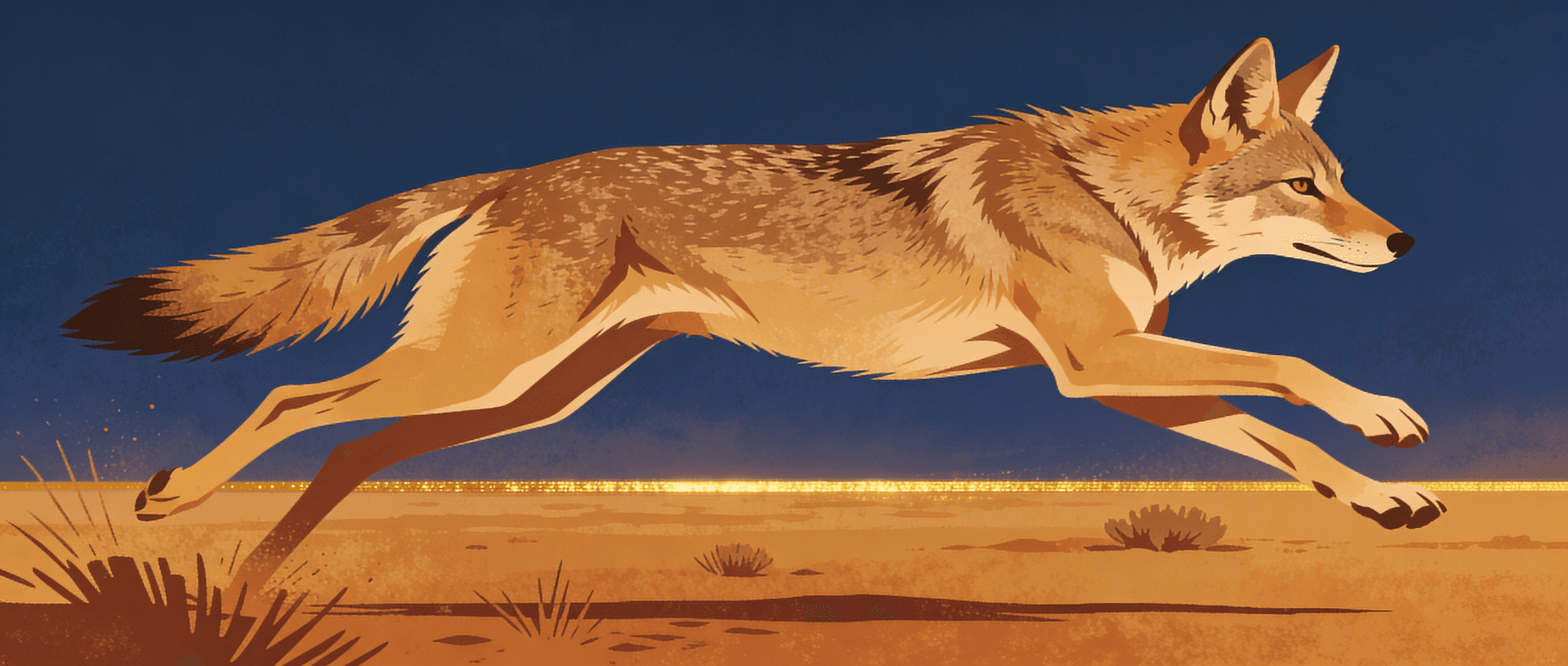
There is a creature in the American West that has confounded hunters, farmers, and wildlife managers for over a century. They have trapped it, driven it from its territory — and every time, it comes back. Not despite the pressure. Because of it. The coyote doesn't just survive adversity. It seems to require it.
Irish politics has its own version.
Micheál Martin has been written off more times than any other serving politician in this country. He took over Fianna Fáil at its lowest point in a century — leading the party into the 2011 election just weeks after becoming leader, absorbing a historic defeat, and beginning the long, unglamorous work of rebuilding from the rubble. He survived multiple leadership challenges. He watched potential successors orbit around him, waiting. He became Taoiseach for the first time in his political life at age 59 — in the middle of a global pandemic — and delivered a steady hand when the country needed one most. Then, just as critics sharpened their knives again over the Jim Gavin presidential fiasco in late 2025, he faced down the dissent and survived. Again.
Fresh backbench unrest has emerged following a turbulent week of fuel protests and a ministerial resignation. His critics are circling. They have been before. Watch what happens next.
The move nobody sees coming
Here is the thing about the coyote that most people miss: it doesn't win through strength. It wins through positioning. It is never quite where you expect it to be. By the time you have set the trap, it has already moved on.
Martin has an almost uncanny ability to do the same. In political communications, we talk a lot about controlling the narrative. Martin has developed something more subtle — the ability to vacate a narrative just as it becomes dangerous. He moves fast enough that the controversy has nowhere to land. He does not engage every battle. He does not rise to every provocation. He has learned — through hard experience and by instinct — that the politician who responds to everything is owned by everything.
This is not cowardice. It is a form of strategic discipline that most communicators never master.
The pandemic moment
If you want to understand what Martin does well, watch the footage from 2020. Ireland was frightened. The political temperature was volatile. He had just become Taoiseach in deeply unusual circumstances, leading an untested three-party coalition into the most complex public health crisis in a generation.
And he was calm. Not performatively calm — not the aggressive reassurance of a politician trying to project confidence they don't have. Genuinely, communicatively calm. He spoke slowly. He acknowledged complexity without amplifying fear. He appeared — and this is the most underrated quality in political communication — as a safe pair of hands.
Safe pair of hands is a phrase that gets dismissed as bland. It is not. In a crisis, it is everything. The public does not need their political leaders to be brilliant in a crisis. They need them to be steady. Martin understood this instinctively, and it served him — and the country — well.
The lesson for every public representative: your communication style in calm times is practice for crisis times. The register you build over years is what people reach for when things go wrong. Consistency is not boring. It is infrastructure.
The Cork lilt and the common touch
There is a dimension to Martin's communication that doesn't get enough attention in the political analysis: he is genuinely good with people. Not performatively good — actually good. He canvasses well. He has the Cork lilt that disarms and humanises. He remembers names, recalls conversations, and shows up in places where the political calculus wouldn't obviously send him.
He visits health food shops and talks about bees. He knows about the environment not because his advisors have briefed him on it but because he is actually interested. These things matter—not because voters are tracking them, but because authenticity reads. People feel the difference between a politician who is feigning interest and one who is genuinely present. Martin, at his best, is genuinely present.
This is the quiet secret behind political longevity: the foot soldiers remember who showed up. The base—the canvassers, the local councillors, the people who put up the posters at 7am—they build their loyalty around moments of genuine human contact. It cannot be manufactured. It can only be accumulated, over years, by turning up.
What the survival record actually means
Martin is the only minister from the Celtic Tiger era crash still standing and has held his Cork South Central seat for 36 years. Let that land for a moment. Every other political figure from that era—the era of the bailout, the IMF, the austerity—has gone. He remains.
He spent his first decade as Fianna Fáil leader quelling backbench upheavals and was repeatedly subject to whispers that he would be the first FF leader never to become Taoiseach—and then became Taoiseach twice.
The survival record is not luck. It is the compound interest of years of consistent, disciplined communication. The same register. The same steadiness. The same willingness to absorb pressure without visibly cracking. Leaders who survive long enough eventually become the institution—and attacking the institution carries its own political cost for the challenger.
The Coyote Principle—applied
Not that you should copy Micheál Martin. Political communication is never about imitation — it is about finding the authentic version of what works. But there are transferable principles here that have nothing to do with party affiliation.
1. Choose your battles with more discipline than feels comfortable. The impulse to respond to every attack, every bad headline, every social media provocation is almost always wrong. The coyote moves. It does not stand and fight on terrain chosen by its opponent.
2. Build your steady register before you need it. The calm, reassuring voice Martin deployed during the pandemic was not invented in March 2020. It was the product of decades of consistent communication. Your style in normal times is your crisis infrastructure.
3. Show up in the small places. The health food shop. The community meeting that doesn't make the news. The canvass on a wet Thursday. These accumulate into something that no amount of media management can manufacture: a reputation for being real.
4. Outlast the noise. Irish political media has a short memory and a hunger for novelty. The politician who can weather a bad cycle without changing their fundamental position or panicking into a different persona has a structural advantage over almost everyone around them.
5. Be respected somewhere they don't expect. Martin's standing in Europe — built quietly over years through foreign affairs and an instinct for the longer European project — has repeatedly served as ballast when his domestic position has been shaky. Every public representative benefits from building credibility in a room that their critics can't easily dismiss.
The coyote is not the most glamorous animal. It doesn't command the landscape the way a lion does. It doesn't inspire awe. But it is still here when everything else has moved on — adapting, surviving, occasionally thriving, always harder to catch than it looks.
In a political environment that destroys most of the people who enter it, there is something worth studying in that.
Powerlines helps elected representatives and political teams communicate with clarity, consistency, and impact. Explore our tools at powerlines.ie.