What Mark Carney’s Davos Speech Teaches Us About Serious Leadership
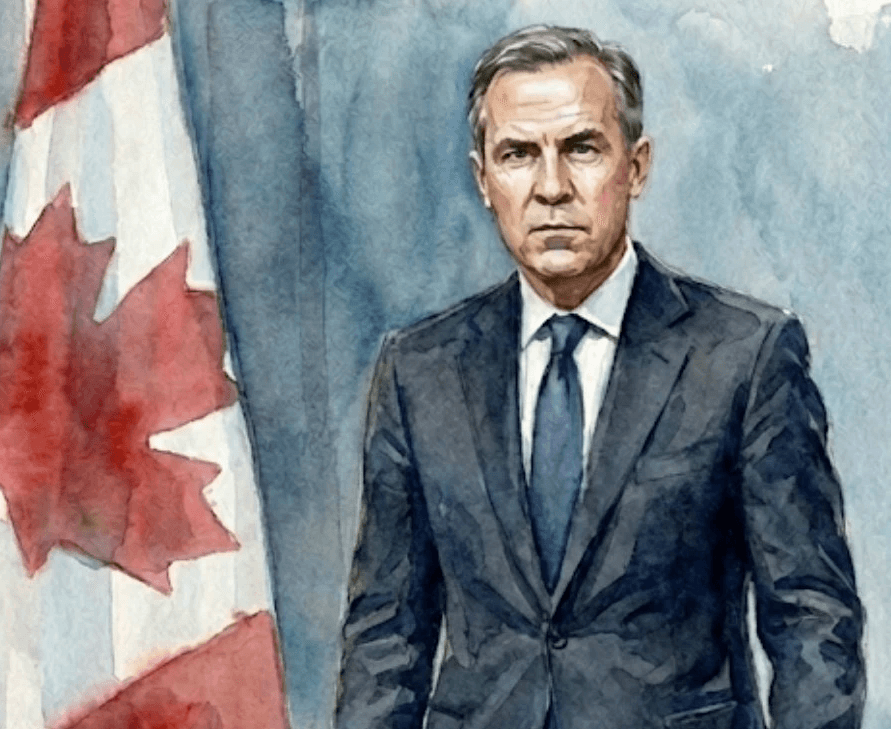
In a political moment dominated by performance, Prime Minister Mark Carney’s address at Davos did something quietly radical: it treated the audience like adults.
There were no slogans designed for clipping.
No manufactured outrage.
No attempts to dominate the news cycle.
Instead, Carney delivered a speech grounded in restraint, clarity, and moral seriousness — and in doing so, reminded a global audience what leadership communication can look like when it is not driven by noise.
One veteran international journalist, reading the speech on the journey home from Davos, described it as “one of the great speeches that changed thinking.” Not because it was dramatic — but because it was precise. Worth reading in full. Worth sitting with.
That reaction matters. Not as hype, but as signal.
This was not a speech engineered to perform.
It was a speech designed to hold.
The moment this speech met
Carney spoke into a landscape defined by fragmentation: fractured trust in institutions, economic anxiety, geopolitical instability, and a public increasingly exhausted by theatrical politics.
In that context, the loudest voices are often mistaken for the strongest. Certainty is confused with authority. Volume substitutes for coherence.
Carney rejected that model entirely.
His speech acknowledged complexity without hiding behind it. It named values without weaponising them. It spoke about economics as a moral system—not an abstract one—and did so without collapsing into either technocracy or populism.
That choice alone set the tone.
Lesson 1: Authority comes from restraint
One of the most striking features of the speech is what Carney does not do. He does not overclaim. He does not promise easy outcomes. He does not pretend that the path ahead is simple.
Instead, he qualifies his assertions. He names trade-offs. He speaks in measured language that signals competence rather than certainty.
In an era where leaders are rewarded for sounding absolutely convinced, Carney demonstrates something rarer: confidence in limits.
Powerlines takeaway:
Authority is not built by pretending complexity doesn’t exist. It’s built by showing you understand it.
Lesson 2: Moral clarity without moral panic
Carney’s speech is values-led, but it never tips into moral theatre.
Democracy, fairness, responsibility, and accountability are named plainly—not dramatized, not shouted, not framed as weapons against opponents. The tone is firm but non-accusatory.
This matters.
Moral panic alienates. Moral clarity invites.
By refusing to turn values into slogans, Carney keeps the door open to persuasion rather than division. He speaks to the room, not at it.
Lesson 3: Economics made human
Carney has spent much of his career inside global financial systems. Yet his language consistently translates those systems into lived consequences.
Markets are discussed in terms of trust. Policy is framed in terms of impact. Growth is tied to social legitimacy.
This is not simplification — it is translation.
The audience is not patronised. Complexity is respected. But the human stakes are never lost.
Powerlines takeaway:
Complexity isn’t the enemy of good communication. Opacity is.
Lesson 4: Calm is a strategic choice
Perhaps the most underestimated aspect of the speech is its emotional register.
Carney is calm. Measured. Unhurried.
In a climate of constant outrage, calm reads as strength. Precision reads as control. Stillness reads as confidence.
The standing ovation that followed felt less like enthusiasm and more like recognition — recognition of a tone many have been missing in public life.
Not excitement. Relief.
Lesson 5: The speech knows what it’s for
This address does not try to be everything.
It is not a campaign speech.
It is not a viral moment factory.
It is not designed for applause lines.
It knows its audience, its setting, and its purpose — and stays disciplined to all three.
That discipline is increasingly rare.
And increasingly valuable.
Why this matters
Powerlines exists because political communication has drifted too far from this kind of seriousness — and because leaders and their teams deserve better models to learn from.
Mark Carney’s Davos speech is not important because of who delivered it, or where. It is important because it demonstrates that clarity, restraint, and moral seriousness still land — even now.
Especially now.