When One Person Models Courage, Courage Is Contagious
When One Person Models Courage, Courage Is Contagious
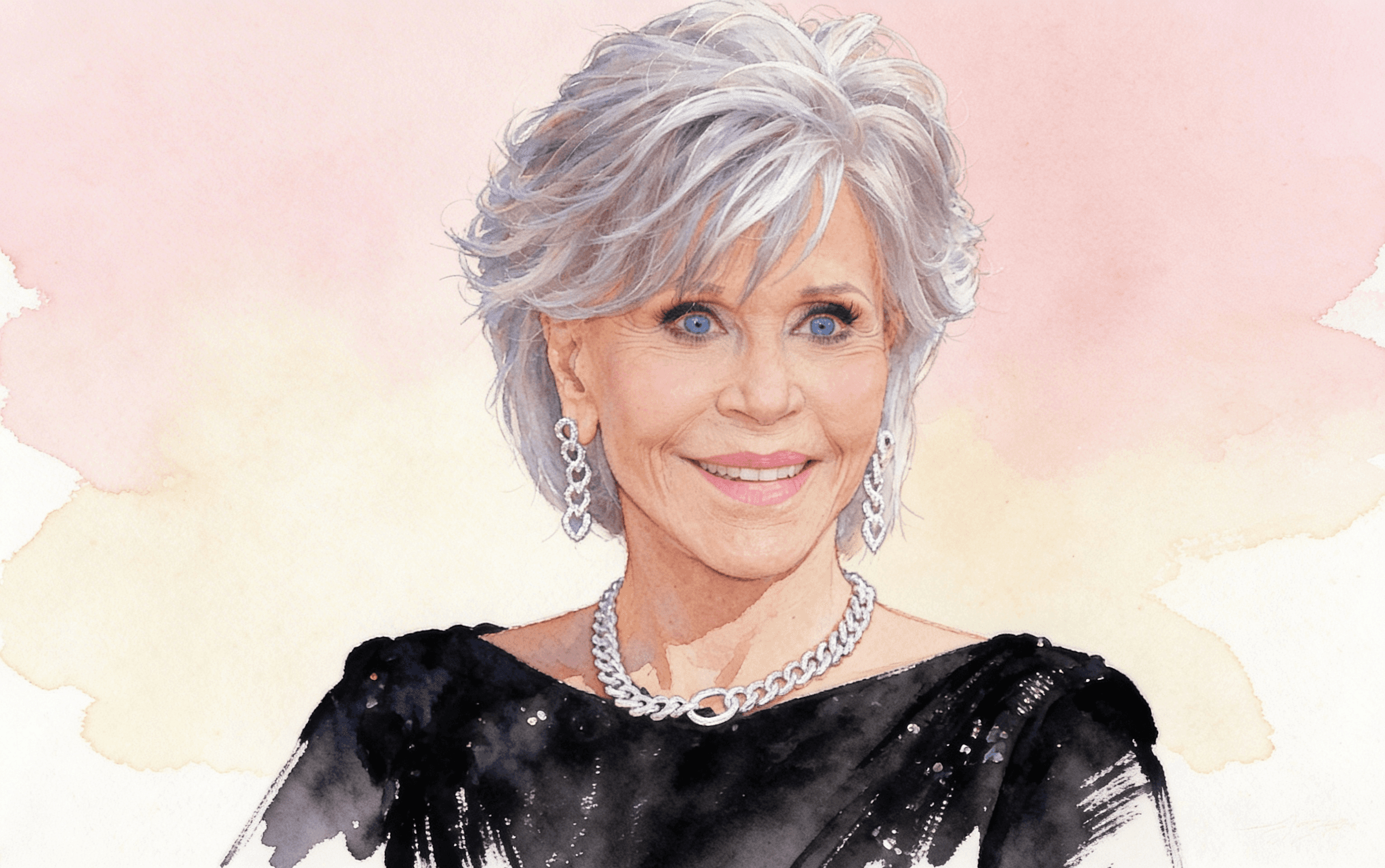
I recently listened to an interview with Jane Fonda that was far more practical than I expected.
At 82, she is not performing outrage. She is building structure.
She spoke about authoritarianism not as chaos, but as psychology.
Its first move, she suggested, is to project inevitability — to appear impermeable, impenetrable, untouchable.
“There’s nothing you can do.”
That is the script.
But power that depends on inevitability is fragile.
It reminds me of The Emperor’s New Clothes.
Authority can look absolute — until someone says plainly what others are already thinking. A child. A comic. A journalist. A professional willing to risk clarity.
And suddenly the illusion cracks.
Authoritarianism depends on compliance — often quiet, often reluctant.
It survives when pillars hold firm. It weakens when those pillars begin to shift.
The Pillars
One of the most clarifying ideas in the interview was what she described as the “pillars of support.”
All governments — democratic or authoritarian — are held up by pillars.
The military.
Finance.
The professions.
The arts.
The media.
Business.
Civil society.
These pillars are not abstract institutions.
They are real people.
Teachers, doctors, journalists, bankers, civil servants, entrepreneurs, artists, engineers, neighbours.
Authoritarian regimes do not survive on force alone. They survive on the continued support — or quiet compliance — of these sectors.
And if the pillars weaken, the regime weakens.
That is the theory of change.
Not spectacle.
Not noise.
Structure.
Courage as Contagion
What struck me most was how she described the way courage spreads.
If someone in the arts pillar stands up, it becomes easier for someone in finance to speak.
If a journalist defends press freedom, it strengthens educators.
If a business leader refuses to enable corruption, it steadies employees.
When one person models courage inside a pillar, it lowers the psychological cost for others.
Courage recalibrates fear.
It signals that silence is not the only option.
And that contagion works both ways.
Silence spreads.
But so does integrity.
Beyond Traditional Protest
We tend to imagine protest as something that happens in the streets.
But protest can also be structural.
It can look like:
Coordinated economic pressure.
Strategic non-compliance.
Withdrawing financial support.
Protecting institutional standards.
Refusing to normalise unethical behaviour.
Organising locally.
Scott Galloway recently argued that economic action — subscription withdrawal, coordinated consumer leverage — can pressure power structures more effectively than outrage alone.
It is not volume that shifts systems.
It is leverage.
That requires organisation, not performance.
And that was another practical insight from the interview.
Jane Fonda did not describe instinctive heroism. She described strategy.
She called smart people.
She built a team.
She surrounded herself with experienced, connected thinkers.
She plugged into the broader ecosystem of organisers.
Not everyone can assemble a national strategy. But anyone can join something local.
Organise their neighbourhood.
Support a civic group.
Build small pods of resilience.
Strengthen community ties — not only politically, but socially and economically.
That is not theatre. It is infrastructure.
Hope Is a Muscle
Greta Thunberg once made a distinction that clarifies this entirely.
Optimism assumes everything will be fine. Hope requires action.
Hope is a muscle. Václav Havel, writing from prison, described hope not as the conviction that something will succeed, but as acting because something is right.
That reframes the question.
It is not:
Will this work?
It is:
Is this aligned with my values?
Hope becomes less about prediction and more about practice.
Courage becomes less about drama and more about alignment.
Weakening Inevitability
Authoritarian movements attempt to project permanence. They aim to convince citizens that resistance is futile, that the structure is immovable.
But pillars are made of people.
When people inside those pillars quietly begin to withdraw compliance, to insist on standards, to defend process, to organise locally — the structure shifts.
Not overnight.
But steadily.
The illusion of inevitability weakens.
And sometimes all it takes to begin that process is one person modelling courage inside their own lane.
Not because success is guaranteed.
But because it is right.
Courage is contagious.
The question is not whether we are optimistic.
The question is whether we are willing to train hope — and stand firmly inside the pillar we already occupy.